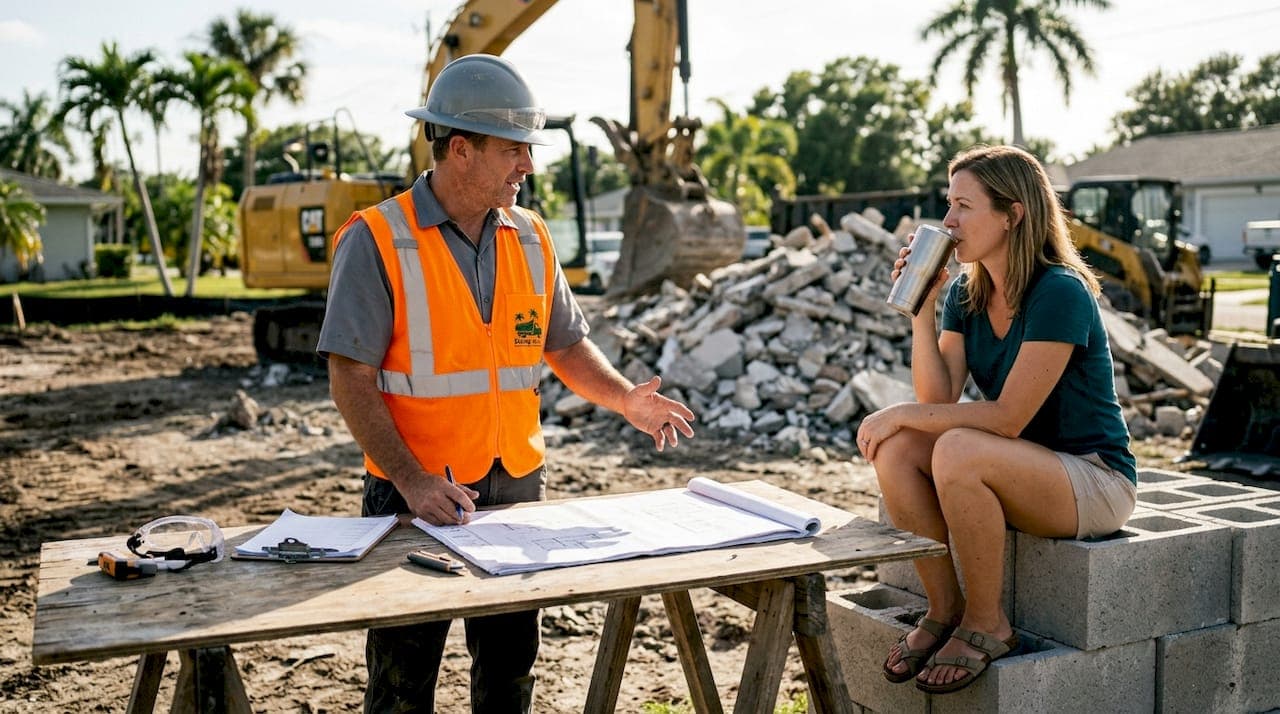
Concrete removal cost is defined as the total expense to break up, haul, and dispose of a concrete slab, priced per square foot based on thickness, reinforcement type, and site access. Most Florida homeowners pay between $2 and $8 per square foot for standard residential projects, with total costs typically falling between $585 and $2,790. Three factors drive nearly every pricing difference: slab thickness, whether the slab contains rebar or wire mesh, and how easily equipment can reach the work area. Knowing these variables before you call a contractor puts you in a much stronger position to budget accurately and avoid surprise charges.
What factors impact the cost of removing concrete?
Slab thickness is the single biggest cost driver. A standard 4-inch unreinforced slab costs $2–$4 per square foot to remove. A thicker foundation slab can push that figure to $14 per square foot. Thicker concrete requires heavier equipment, more labor hours, and more haul loads.
Reinforcement type adds another layer of cost. Rebar and wire mesh increase labor time and equipment needs, adding $1–$3 per square foot to the total. Rebar must be cut with a reciprocating saw or angle grinder, then separated from the broken concrete before disposal. That separation step alone can add a full hour of labor per load.
Site accessibility is an often-overlooked cost factor. Limited access can raise removal costs by 20%–40% because crews must haul debris manually or bring in specialized equipment. A backyard patio surrounded by fencing, for example, may cost significantly more to remove than an open driveway.
Disposal method also affects your final bill. Recycling facilities charge $50–$100 per ton for concrete, while landfill fees run $80–$150 per ton. Choosing a recycling facility saves money and reduces environmental impact. Some contractors bundle disposal into their quote; others bill it separately.
| Slab type | Reinforcement | Estimated cost per sq ft |
|---|---|---|
| Patio or sidewalk | None | $2–$4 |
| Driveway | Wire mesh | $3–$6 |
| Driveway | Rebar | $4–$7 |
| Garage floor | Rebar | $4–$8 |
| Foundation | Heavy rebar | $6–$14 |
Pro Tip: Ask every contractor whether disposal fees are included in their quote. A low per-square-foot bid that excludes hauling can end up costing more than a higher all-in price.
How much does concrete removal cost per project type?
Project type determines the typical slab size, thickness, and reinforcement level, which together set the price range you should expect.
Patios and sidewalks are the most affordable projects. These slabs are usually 4 inches thick and unreinforced. Patios and sidewalks cost $2–$5 per square foot to remove. A 200-square-foot patio typically runs $400–$1,000 in total.
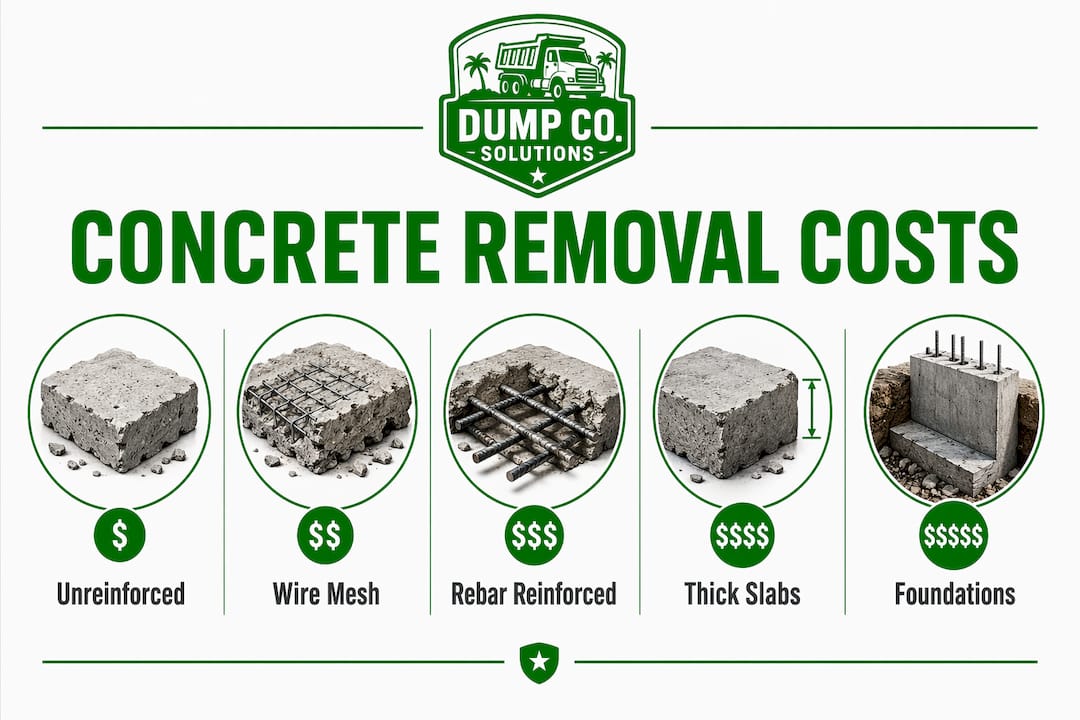
Driveways cost more because they are often reinforced with wire mesh or rebar. Driveways run $3–$7 per square foot depending on reinforcement. A standard two-car driveway of 400–600 square feet can cost $1,200–$4,200 to remove.
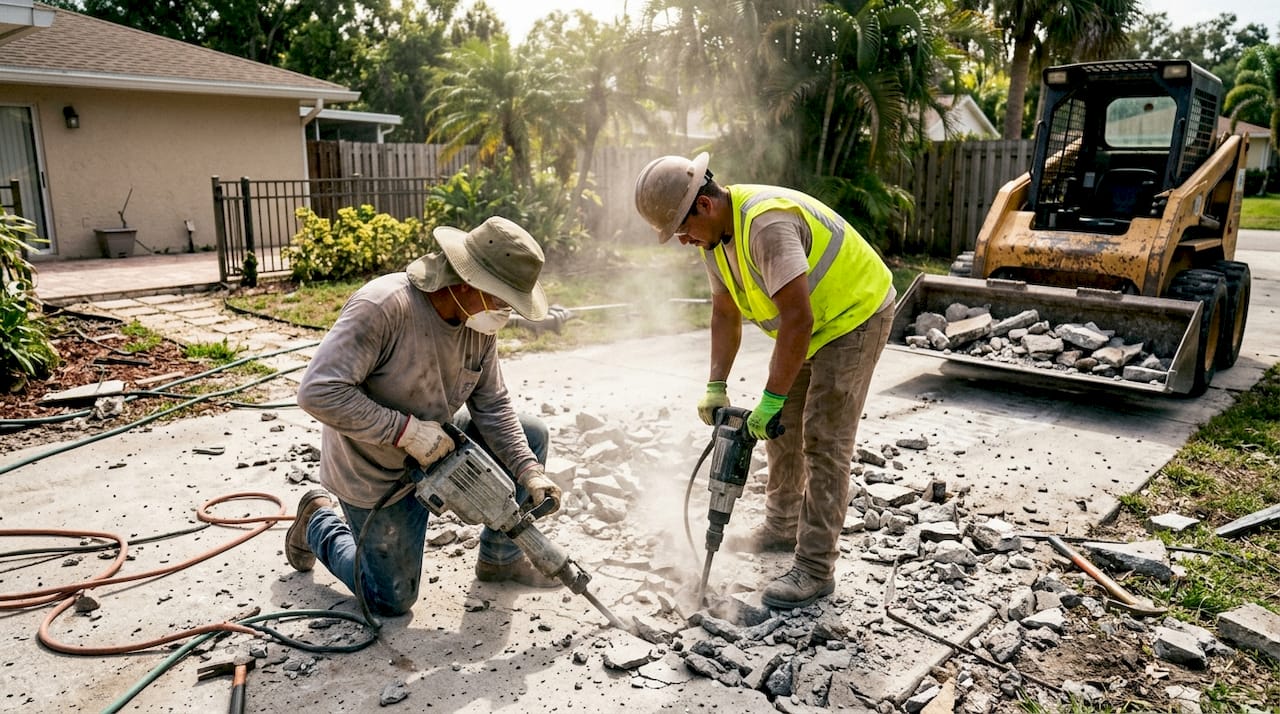
Garage floors sit in the mid-to-upper range. They are typically 4–6 inches thick with rebar, placing them at $4–$8 per square foot. A 400-square-foot garage floor can run $1,600–$3,200 before disposal.
Foundations are the most expensive category. Thickness, heavy rebar, and the need for excavation equipment push foundation removal costs to $6–$14 per square foot. A small foundation of 800 square feet could cost $4,800–$11,200.
| Project type | Typical size | Cost per sq ft | Estimated total |
|---|---|---|---|
| Patio | 150–300 sq ft | $2–$5 | $300–$1,500 |
| Sidewalk | 50–150 sq ft | $2–$4 | $100–$600 |
| Driveway | 400–600 sq ft | $3–$7 | $1,200–$4,200 |
| Garage floor | 300–500 sq ft | $4–$8 | $1,200–$4,000 |
| Foundation | 600–1,200 sq ft | $6–$14 | $3,600–$16,800 |
Key cost considerations across all project types:
- Disposal and hauling fees add $50–$150 per ton on top of labor.
- Florida's heat increases labor intensity, which can affect scheduling and crew size.
- Permits may be required for structural or foundation work, adding $25–$200.
- Slabs near utility lines require extra caution and may need inspection before work begins.
Should you remove concrete yourself or hire a professional?
DIY concrete removal is realistic for small, unreinforced slabs under 100–200 square feet. Think of a small garden path or a single parking pad. For anything larger or reinforced, the math and the risk both shift toward hiring a professional crew.
The upfront cost of going DIY includes jackhammer rental at $50–$150 per day and dumpster rental at $300–$600. Add safety gear, blade replacements, and your own time, and the savings over a professional quote shrink fast. On a 150-square-foot unreinforced patio, DIY might save you $200–$400. On a 500-square-foot rebar-reinforced driveway, it rarely saves anything.
Here is a practical breakdown of the DIY process:
- Call 811 before you start. This free service marks underground utility lines. Skipping this step can result in a gas or water line strike.
- Rent the right equipment. A standard electric jackhammer works for thin slabs. Thick or reinforced concrete needs a pneumatic or gas-powered unit.
- Wear full protective gear. Concrete breaking creates dust and sharp shards that cause serious eye and lung injuries. Use safety glasses, a dust mask rated N95 or higher, gloves, and steel-toed boots.
- Break concrete into manageable pieces. Chunks under 50 pounds are easier to load and cheaper to haul.
- Arrange disposal before you start. A roll-off dumpster placed in your driveway is the most practical option for residential projects.
Pro Tip: DIY removal of large or reinforced slabs often leads to extended rental days and increased injury risk. If your slab has rebar or exceeds 400 square feet, get at least two professional quotes before committing to DIY.
Professional crews bring hydraulic breakers, skid steers, and dump trucks. They finish in hours what a homeowner might spend a weekend on. Speed matters in Florida's summer heat, where working conditions deteriorate quickly after 10 AM.
What additional costs and permits should homeowners consider?
Permits and disposal fees are the two most common budget surprises in concrete removal projects. Getting clear on both before signing a contract protects you from unexpected charges.
Key additional costs to verify upfront:
- Permit fees: Permits range from $25 to $200 depending on your municipality and project type. Foundation and structural removal almost always require a permit. Some Florida counties also require a post-removal inspection.
- Disposal fees: Ask whether your contractor's quote includes haul-away. If not, budget $50–$150 per ton for disposal, with landfills charging more than recycling facilities.
- Access surcharges: If your slab is in a tight backyard or behind a gate, expect a 20%–40% cost increase due to manual labor requirements.
- Urban location premiums: Contractors in dense Florida cities like Jacksonville or Tampa often charge more for parking, traffic delays, and permit processing time.
- Debris separation fees: If your slab has rebar, some haulers charge extra to separate metal from concrete before recycling.
Choosing a recycling facility over a landfill is worth the extra coordination. Concrete recycling facilities charge less per ton and divert debris from Florida's already-strained landfill system. Crushed concrete is reused as road base and fill material, so you are contributing to a useful supply chain rather than adding to waste.
Always get a written, itemized quote. A contract that lists labor, equipment, disposal, and permit fees separately gives you a clear picture and protects you if the scope changes.
Key Takeaways
Concrete removal cost ranges from $2 to $14 per square foot depending on slab thickness, reinforcement type, and site access, with disposal and permit fees adding meaningfully to the total.
| Point | Details |
|---|---|
| Cost range by slab type | Unreinforced slabs cost $2–$4/sq ft; rebar-reinforced foundations can reach $14/sq ft. |
| Reinforcement adds cost | Rebar and wire mesh add $1–$3 per square foot due to cutting and separation labor. |
| Site access matters | Limited access raises total cost by 20%–40% through added manual labor. |
| DIY has a clear limit | DIY is practical only for slabs under 200 sq ft with no reinforcement. |
| Recycling saves money | Concrete recycling facilities charge $50–$100 per ton versus $80–$150 at landfills. |
What I've learned about budgeting concrete removal the right way
Most homeowners underestimate their concrete removal project by focusing only on the per-square-foot rate. That number is just the starting point. The real cost lives in the details: how thick the slab is, whether it has rebar, how a truck gets to it, and who handles the debris.
The most common mistake I see is treating disposal as an afterthought. A homeowner gets a great labor quote, then discovers the contractor does not haul. Suddenly they need a dumpster, a separate hauler, and a recycling facility contact. That coordination adds days and dollars to a project that should have been straightforward.
Resurfacing existing concrete costs $3–$10 per square foot and is worth considering when the slab is structurally sound. If there are no major cracks, no sinking, and no drainage issues, resurfacing eliminates demolition and disposal costs entirely. Many homeowners skip this option without even asking their contractor about it.
My honest advice: get three quotes, ask each contractor to itemize every line, and confirm whether permits are included in their scope. Clear upfront communication about slab thickness, reinforcement, and access is the single best way to avoid surcharges after work begins. A contractor who asks detailed questions before quoting is almost always more reliable than one who gives you a number in 30 seconds.
— The
Dumpcosolutions makes concrete debris removal straightforward
Dealing with broken concrete after demolition is where many Florida homeowners get stuck. You have a pile of rubble, no truck, and no clear plan for disposal.

Dumpcosolutions handles exactly this problem for homeowners and property managers across Jacksonville, FL. Their dumpster rental and demolition services include roll-off dumpsters sized for any concrete project, full-service junk removal with same-day and next-day availability, and responsible disposal that prioritizes recycling over landfill. Pricing is upfront with no hidden fees, and their licensed, insured crew does the heavy lifting so you do not have to. Whether you need a dumpster dropped for a DIY patio removal or a full crew to haul a broken driveway, Dumpcosolutions has you covered.
FAQ
How much does concrete removal cost per square foot?
Concrete removal costs $2–$8 per square foot for most residential projects. Heavily reinforced foundations can reach $14 per square foot.
Do I need a permit to remove concrete in Florida?
Permit fees range from $25 to $200 depending on your city or county. Foundation and structural removal almost always require one.
Is DIY concrete removal worth it?
DIY makes sense for small, unreinforced slabs under 200 square feet. Larger or reinforced slabs cost more in extended rentals and injury risk than professional removal.
What is the cheapest way to dispose of broken concrete?
Concrete recycling facilities charge $50–$100 per ton, which is less than most landfill rates. Separating concrete from other debris before drop-off often qualifies you for the lower rate.
How long does concrete removal take?
A standard patio or driveway removal takes one to two days for a professional crew. DIY projects on the same size slab often take a full weekend due to equipment limitations and physical fatigue.