
Expect to pay about $2 to $7 per square foot for professional tile removal, with dustless methods running higher. A typical medium-sized room lands within a moderate cost range, averaging around the midpoint, according to Angi's cost data. Homewyse pegs the national starting range slightly higher, at $3.05 to $5.64 per square foot for basic removal before site conditions push it up.
Your next move is simple: measure your square footage and get two or three local quotes before you budget a dollar amount.
- Standard removal: $2 to $7 per sq ft
- Dustless or HEPA-contained removal: adds a noticeable premium per square foot
- Whole-room average (160 sq ft): roughly $560
Quick Stat: Labor is typically the largest line item on a tile removal invoice, according to HomeAdvisor, often outweighing disposal and equipment combined. OSHA also flags silica dust from tile removal as a real respiratory hazard, which is why dust control affects your final price.
Key Takeaways
Tile removal costs $2 to $7 per square foot nationally, with labor, disposal, and dust control accounting for most of the variation between quotes.
| Point | Details |
|---|---|
| Know your baseline range | Budget $2 to $7 per sq ft for standard removal, with Homewyse citing $3.05 to $5.64 as a common starting point. |
| Size drives the total | A 160 sq ft room typically runs around $560, per Angi's cost data. |
| Watch for minimums | Small jobs often hit a $150 to $300 minimum charge regardless of square footage. |
| Budget a contingency | Hold back 10 to 20% for substrate repairs that only show up once tile is removed. |
| Bundle for efficiency | Dump Co. Solutions combines tile demo, dumpster rental, and debris hauling into one scheduled visit with upfront pricing. |
Table of Contents
- Tile Removal Cost Breakdown by Room Size
- What Factors Affect Tile Removal Pricing?
- How Do Professionals Remove Tile?
- Should You Remove Tile Yourself or Hire a Pro?
- What Does Tile Debris Disposal Actually Cost?
- How to Get an Accurate Tile Removal Quote
- How Dump Co. Solutions Handles Tile Removal and Debris
- From Bid to Bare Floor: What the Timeline Looks Like
- Get a Straight Answer on Your Tile Removal and Cleanup Costs
- Frequently Asked Questions
- Sources
Tile Removal Cost Breakdown by Room Size
The per-square-foot price you see quoted almost never tells the whole story. Contractors build their number from labor, disposal, and adhesive removal, and each piece moves independently depending on your tile and your house.
HomeGuide and Angi both land on the same core range: $2 to $7 per square foot for standard demo work. Homewyse's calculator narrows that further to $3.05 to $5.64 for a basic job with typical site conditions. The spread between those numbers usually comes down to labor rates in your area, whether the crew needs to remove backerboard or membrane underneath, and how the debris gets hauled away.
A cost breakdown from One and Done Prep splits a typical job into three components: labor, disposal, and adhesive removal costs each contribute on a per-square-foot basis, with labor generally largest. Add those up and you land right in the middle of the ranges other calculators quote. That's a useful gut-check when a quote comes back and you want to know if it's fair.
Here's how those per-square-foot numbers translate into real project totals for common room sizes:
These ranges reflect standard removal without dustless upgrades, hazardous-material testing, or subfloor repair. Add any of those and the top end climbs fast.
- Most contractors set a minimum job charge somewhere between $150 and $300, regardless of square footage.
- A 20-square-foot bathroom floor can cost almost as much per square foot as a 100-square-foot kitchen because the crew still has to show up, set up containment, and haul debris either way.
- Calculators like Homewyse let you plug in your zip code and get a location-adjusted estimate, which is worth doing before you call anyone.
Pro Tip: If your project is small, ask upfront about the minimum charge. A 20-square-foot job priced at $7 per square foot only comes to $140, but most contractors won't show up for less than $150 to $300, so your real cost is the minimum, not the per-square-foot math.
Whole-house or multi-room jobs behave differently. Once you cross into full bathroom demolition territory, where tile removal is bundled with fixture removal and plumbing disconnects, This Old House reports an average around $1,445, with a range of $658 to $2,469. That number includes far more than tile, but it's a useful reference point if you're planning a gut renovation rather than a simple floor swap.
What Factors Affect Tile Removal Pricing?
Two rooms of identical square footage can generate wildly different quotes. The tile itself, what's underneath it, and what's around it all move the price independently.
- Tile material: Ceramic comes up easiest. Porcelain is denser and takes longer to break. Natural stone (travertine, slate, marble) is often the hardest and slowest to remove, which raises labor time.
- Adhesive type: Thinset mortar bonds tile directly to the subfloor and usually requires more grinding to fully clear. Mastic releases somewhat easier. A membrane underlayment adds an extra removal step and extra cost.
- Subfloor type and condition: Concrete slab tolerates aggressive mechanical removal. Plywood or backerboard subfloors need more careful, slower work to avoid damaging what's underneath, which shows up as added labor hours.
- Access and demolition complexity: Tile that runs under a vanity, around a toilet flange, or beneath a bathtub lip takes longer to cut around than an open floor plan.
- Wall vs. floor tile: Wall tile removal, especially in a tiled shower surround, often costs more per square foot than floor tile because of overhead work and the risk of damaging waterproofing behind it.
- Regional labor rates: Bureau of Labor Statistics wage data shows meaningful pay differences across metro areas, and that gap shows up directly in your quote. Urban markets with higher construction wages tend to price tile removal above rural averages.
- Disposal and tipping fees: Local landfill and transfer station fees vary by county and by the weight of the debris, since tile is dense and heavy.
- Hazardous material testing: Homes built before the 1980s may need asbestos or lead testing before demo begins, which adds both cost and time.
Quick Stat: Labor typically makes up the largest share of a tile removal invoice, per HomeAdvisor's cost data, which is why anything that slows a crew down (dense stone, tricky access, careful subfloor work) moves your total more than the material itself does.
Pro Tip: If you're already planning a bigger demo project, ask about bundling tile removal into that scope. HomeGuide notes that combining tile demo with a larger demolition or debris-hauling package often lowers the effective cost per square foot, since one crew and one dumpster handle everything instead of paying for two separate mobilizations.
How Do Professionals Remove Tile?
Most contractors reach for one of three approaches depending on tile type, subfloor, and your timeline. Manual pry-and-chip work, using hand tools like a chisel and hammer, is common on smaller jobs or when the subfloor is delicate plywood that can't take heavy vibration. Mechanical jackhammers and electric chippers move faster on concrete slabs and larger square footage, but they're louder and produce more dust and debris volume. Floor strippers, essentially motorized scraping machines, work well on large open areas with a strong adhesive bond.
Dust control is where pricing splits noticeably. Dustless grinders paired with HEPA vacuum attachments capture debris at the source instead of letting it spread through the house. Containment tents seal off the work area entirely. Both options add setup time and equipment cost, which is why dustless removal typically carries a per-square-foot premium over standard demo, according to Angi's cost breakdown.
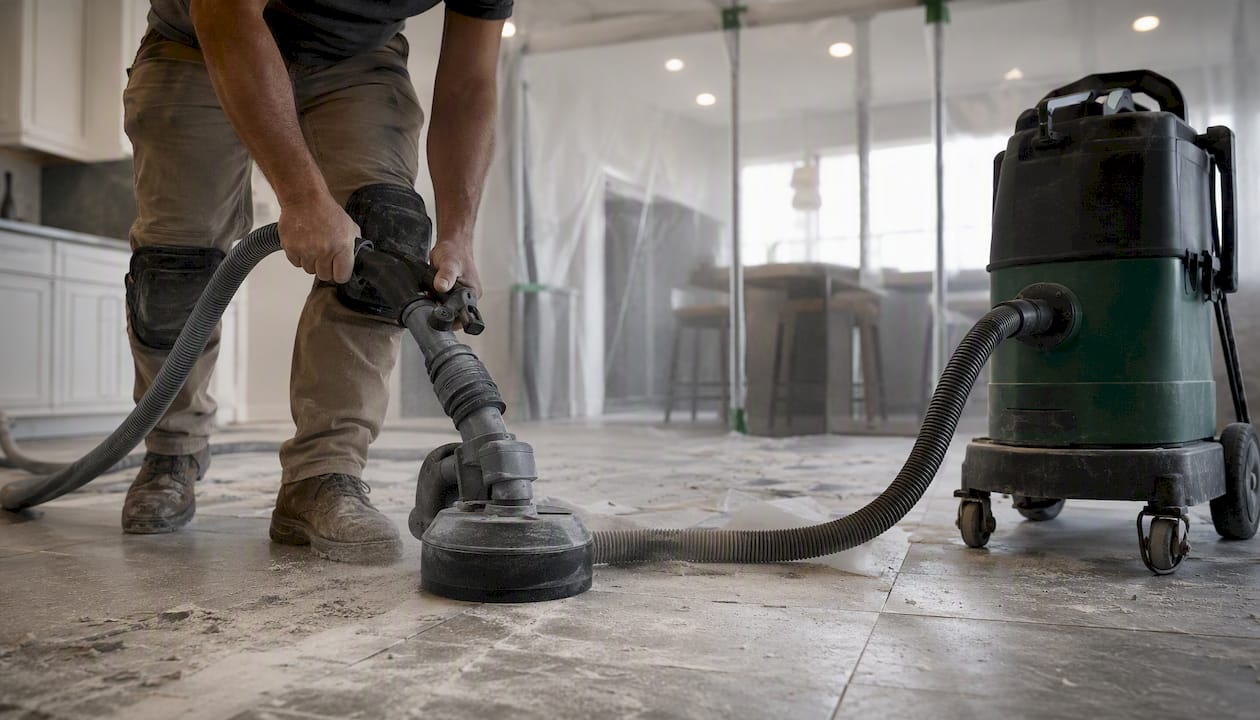
Quick Stat: OSHA's silica guidance documents real respiratory risk from the fine crystalline dust tile removal generates, which is the underlying reason dust control isn't just a comfort upgrade, it's a genuine safety measure worth paying for if anyone stays in the house during work.
Jobs that involve removing waterproofing membrane, cement backerboard, or embedded heating elements under the tile add labor hours that standard quotes don't always anticipate.
Should You Remove Tile Yourself or Hire a Pro?
DIY tile removal can save real money, but the time commitment surprises most homeowners. Budget roughly 8 to 12 hours per 100 square feet if you're working alone with hand tools, longer if the tile is stone or the adhesive is stubborn thinset. A professional crew typically clears that same area in a fraction of that time because they bring mechanical equipment and experience reading how tile releases from the substrate.
The savings on paper look appealing since you're only paying for tools and disposal. In practice, the risks eat into that savings fast:
- Substrate damage from an errant jackhammer swing can turn a simple tile job into a subfloor replacement.
- Disposal logistics get expensive quickly since tile is heavy and most curbside services won't take construction debris.
- Asbestos or lead exposure is a real risk in homes built before the 1980s, and DIY removal without testing is genuinely dangerous.
- Project delays stack up when a weekend job turns into three weekends because the tile fought back harder than expected.
Hire a professional when the area is large, the tile is natural stone, you suspect hazardous materials in an older home, or you're working against a tight renovation timeline. For a small, low-stakes area with modern ceramic tile and a concrete slab underneath, DIY is a reasonable call.
What Does Tile Debris Disposal Actually Cost?
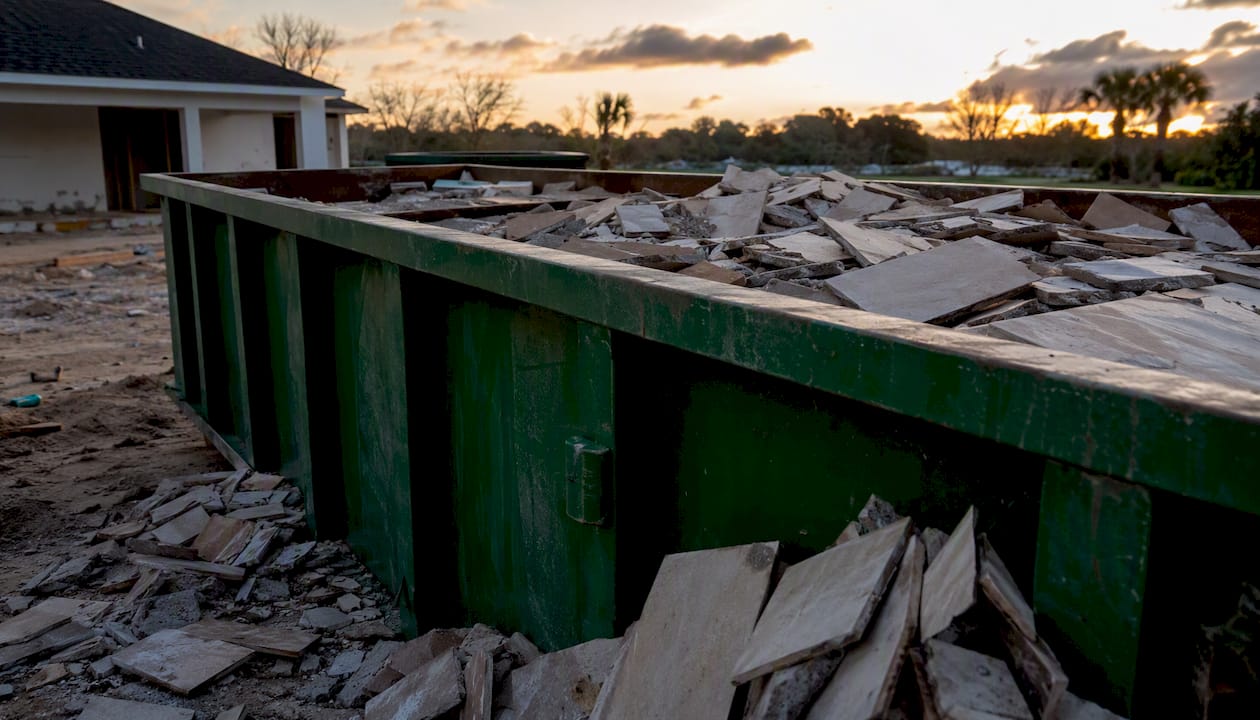
Disposal is the line item homeowners underestimate most. Tile is dense, so a small pile weighs far more than it looks. A dumpster rental, sized to fit your project, is usually the most predictable way to budget this rather than paying per-load hauling fees that can climb if the crew makes multiple trips.
Hazardous-material testing changes the math entirely. If your home was built before the 1980s and you suspect asbestos in the tile, mastic, or underlayment, testing before demo starts is worth the delay. Abatement, if required, adds a separate and often substantial cost on top of standard removal.
| Dumpster Size | Best For |
|---|---|
| 10 yard | Small bathroom or single-room tile job |
| — | Kitchen or multi-room removal |
| — | Whole-house demo or combined tile and fixture removal |
- Ask whether your quote includes disposal as a line item or bundles it into the per-square-foot rate.
- Confirm the minimum labor charge separately from any dumpster or tipping fee, since these are often quoted independently.
How to Get an Accurate Tile Removal Quote
Getting apples-to-apples bids starts before you ever call a contractor.
- Measure your square footage for every room getting tile removed, and round up slightly to account for closets or transitions.
- Photograph access points, including cabinets, tubs, and tight corners, so contractors can price complexity accurately.
- Note your tile type and any visible subfloor condition, like cracks, soft spots, or previous water damage.
- Ask about the home's age so you can flag potential asbestos or lead testing needs upfront.
When you talk to contractors, ask direct questions:
- What's your minimum job charge?
- Is disposal included, or billed separately?
- Do you offer dustless or HEPA-contained removal, and what's the premium?
- Will you test for asbestos or lead if the home predates 1980?
- What's your estimated timeline, and are you licensed and insured?
- Is the quote per-square-foot, hourly, or flat rate, and does it include a contingency for subfloor repair?
Most legitimate quotes fall into one of three structures: per-square-foot for straightforward jobs, hourly for unpredictable demo scope, or flat-rate for bundled packages. Confirm which one you're getting before you sign anything.
How Dump Co. Solutions Handles Tile Removal and Debris
Dump Co. Solutions is locally owned, licensed, and insured, and handles the parts of a tile removal project that homeowners dread most: the hauling and the disposal. Instead of coordinating a separate demo crew and a separate dumpster company, you get one team managing both.
- Same-day and next-day scheduling for jobs that can't wait
- Site cleanup included, so you're not left sweeping grout dust
- Eco-conscious disposal practices for tile, thinset, and construction debris
- Single-provider convenience that avoids surprise hauling fees from a second vendor
Choose this route when you're bundling tile demo with a bigger cleanup, working against a tight timeline, or you just want one invoice instead of three.
From Bid to Bare Floor: What the Timeline Looks Like
A typical tile removal project moves through a few clear stages. Preparation comes first: clearing furniture, protecting adjacent surfaces, and confirming any hazardous-material testing is done. Then comes the demo itself, usually the fastest part of the process, where tile gets pried, chipped, or ground away and loaded for haul-off.
After demo, the crew inspects the subfloor for damage, cracks, or moisture issues that need addressing before new flooring goes down. Debris loading and disposal typically happen the same day as demo if a dumpster is on-site, which keeps the project from stalling out with a pile of tile sitting in your garage. Cleanup, including a dust sweep and final walkthrough, closes out the job.
For a standard bathroom or small kitchen, expect the full cycle, from first pry bar to swept floor, to take one to two days for a professional crew. Larger whole-floor jobs or ones involving membrane and backerboard removal can stretch to three or four days, especially if subfloor repairs turn up mid-project. DIY timelines run considerably longer since you're working around your regular schedule and likely renting or buying tools as you go.
A quick word on the surprises nobody budgets for
More than one homeowner has pried up a single tile expecting concrete and found soft, water-damaged plywood instead. It's a common surprise, and it's exactly why a contingency matters. Hold back 10% to 20% of your budget for substrate repairs you can't see until the tile comes up. It's cheaper to plan for it than to scramble for it.
Get a Straight Answer on Your Tile Removal and Cleanup Costs
Dump Co. Solutions gives you one call instead of three: tile demo, dumpster rental, and debris hauling handled by a single crew with upfront pricing and no hidden fees tacked on at the end.

When you request a quote, expect clear line items for labor, disposal, and dumpster rental sized to your project, along with a transparent minimum charge stated upfront rather than buried in fine print. Scheduling is flexible, with same-day and next-day options for homeowners working against a deadline. If your project also involves demolition beyond the tile itself, from cabinets to old fixtures, Dump Co. Solutions' demolition services can fold that into the same visit. Ready to see what your project actually costs? Request a free estimate and get a quote built around your square footage, not a generic national average.
Frequently Asked Questions
What is the average cost to remove tile per square foot? Most homeowners pay between $2 and $7 per square foot for standard tile removal, with Homewyse's calculator narrowing the typical starting range to $3.05 to $5.64.
How much does it cost to demo a bathroom, including tile? A full bathroom demolition, which includes tile plus fixtures and plumbing disconnects, averages around $1,445 nationally, according to This Old House, with a range of $658 to $2,469.
Does dustless tile removal cost more? Yes. Dustless or HEPA-contained removal methods typically increase cost due to the extra equipment and setup time, though it's worth the cost when people are living in the home during the project.
Can I remove tile myself to save money? You can, and it saves on labor costs, but plan for 8 to 12 hours per 100 square feet and factor in disposal, tool rental, and the risk of damaging the subfloor if you're not experienced with tile demo.
Do I need to test for asbestos before removing tile? If your home was built before the 1980s, testing is worth doing before demo starts, since older tile, mastic, and underlayment can contain asbestos that requires special handling.
What's included in a typical tile removal quote? A clear quote itemizes labor, disposal or dumpster fees, and any dust-control upgrades separately, along with a stated minimum charge so you know your floor price before work begins.
Sources
- Cost to Remove Tile - 2026 Cost Calculator (Customizable)
- How Much Does It Cost to Remove Tile Flooring? 2025 Data
- How much does it cost to remove tile? (HomeGuide)
- How Much Does Tile Floor Removal Cost? 2025 Data
- Silica: Crystalline silica health effects (OSHA)